

At the maintenance review
Consider a gearbox investigation that is one click away from being closed. Last month's oil report raised a particle-count concern. The return filter has since been replaced, and the latest report looks cleaner. The maintenance lead is about to cancel the follow-up inspection.
Then the technician mentions a detail missing from the label. The usual sampling port was inaccessible, so this bottle came from the other side of the filter.
That changes the decision. The laboratory has measured a different part of the oil circuit. Closing the investigation would treat cleaner downstream oil as proof that the original concern had gone away.
What changed between the two bottles
In this example, oil returns from the gearbox through a filter to a reservoir. The earlier bottle came from point A, before the filter. The new bottle came from B, after it.
The filter sits between those two pieces of evidence. It captures particles before the oil reaches the reservoir, so a result from B answers a different question from a result at A. Calling both samples 'gearbox oil' hides that difference.
A reservoir-bottom sample, C, adds another distinction: it may contain settled material that is not representative of the circulating stream. It can help a targeted investigation, but it cannot quietly replace the routine sample.

For the filtration principle behind this example, see Parker: Handbook of Hydraulic Filtration.
Keep the work order open for the right reason
The new report is still useful. It describes the oil collected after the filter under the recorded conditions. What it cannot do is show a like-for-like improvement in the established A trend, or prove on its own that the gearbox has stopped generating debris.
Before changing the maintenance plan, put the previous sample label beside the new one and check the maintenance log. Confirm the point, operating state and work done between samples. A long shutdown, a top-up or a filter replacement belongs in that comparison.
For this gearbox, the next step is to review the original concern with the technical owner and arrange comparable evidence at the established point. If the point must change permanently, agree with the laboratory how the new trend will be identified. Keep the old history available.
Consistency must be achieved safely. Follow the equipment and site sampling procedure, including access and isolation requirements. An unavailable port is a reason to record an exception, never to improvise access to hot, pressurized or moving equipment.
Sampling consistency and safe access: Mobil: Lubricant Analysis Fundamentals; HSE safety guidance.
Protect the sample you worked to obtain
Once the point is settled, collection quality still matters. Dust under a cap or residue in the sampling equipment can add particles that were never in the machine. The laboratory cannot tell from the bottle alone where they came from.
Use the laboratory's specified bottle and collection equipment, keep them protected until use, and follow the port's approved cleaning and flushing method. Caterpillar's guidance calls for fresh tubing for each sample. The method and flushing quantity need to suit the installation.
If collection goes wrong, write down what happened and arrange a replacement sample. Keep the first result visible to the reviewer. A vague 'bad sample' note is a poor reason to dismiss an abnormal finding.
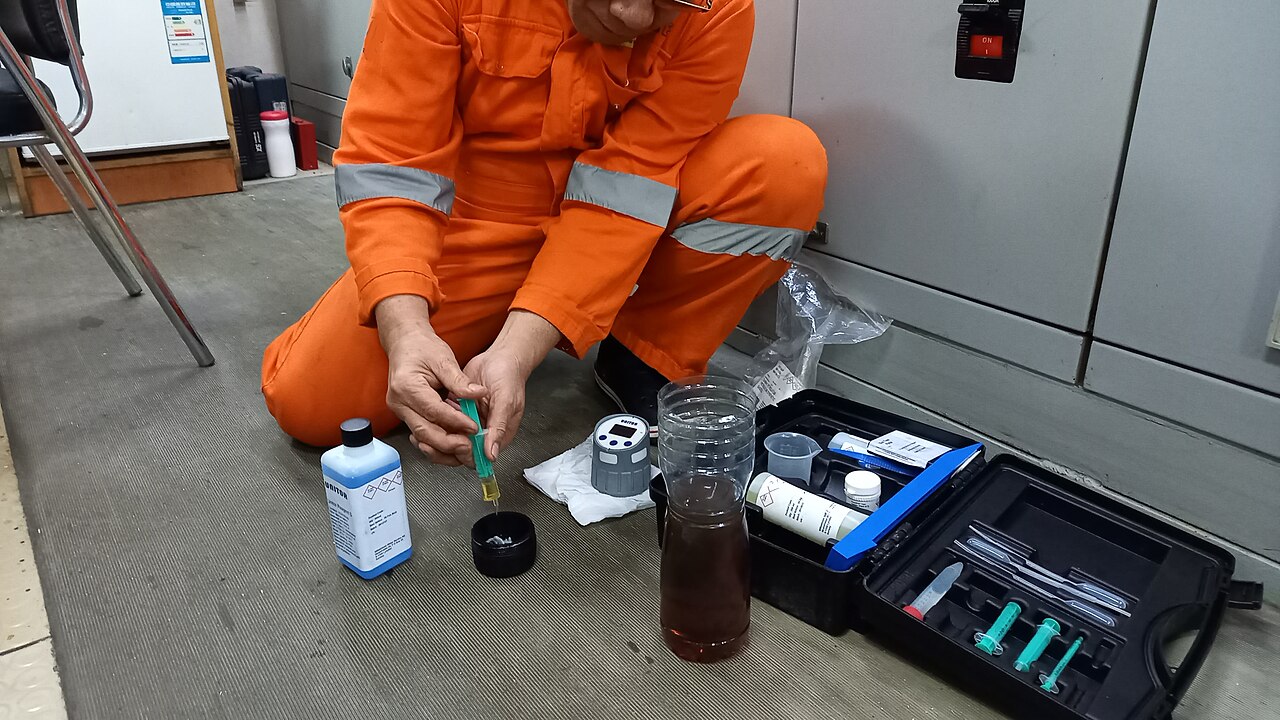
Collection methods and clean supplies: Caterpillar: How to Take a Good S.O.S Sample.
Leave a note the next person can use
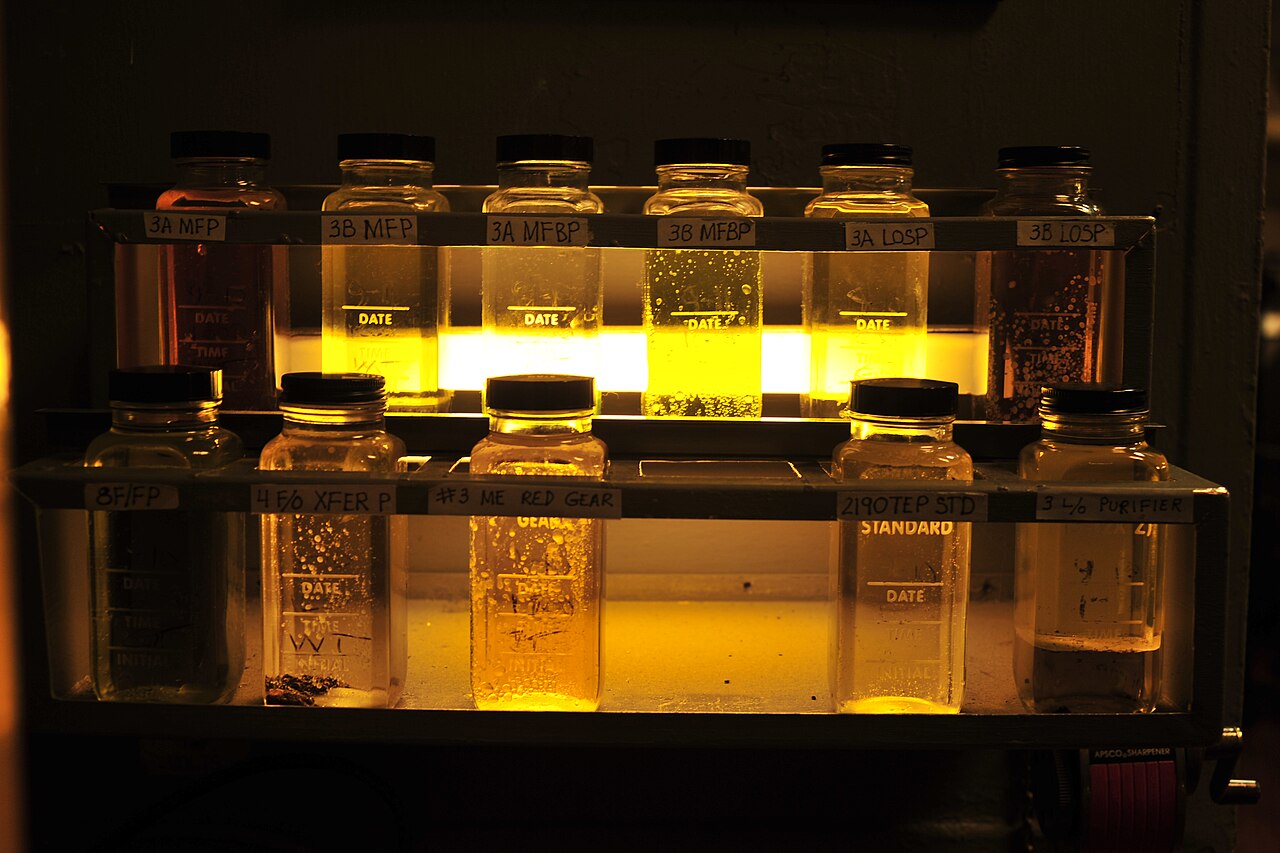
The most valuable sentence in this case is also the simplest: 'Point B used because A was inaccessible.' Put it on the sample record and beside the work order, where the next shift will see it.
The full record should also identify the asset and compartment, collection time, operating state, oil, service hours and recent top-ups or maintenance. Mark a missing detail as unknown. A neat form with the wrong sampling point creates more confidence than the evidence deserves.
Example work-order note
- Asset
- GB-07 / circulating oil system
- Sample position
- B, downstream of return filter
- Reason for change
- Routine point A inaccessible
- Work since last sample
- Return filter replaced
- Review note
- Point changed. Keep separate from the A trend pending technical review.
Your turn
What would you write on the work order?
The next shift sees the cleaner report and asks whether it can cancel the gearbox inspection. You have one short note to explain the decision.
- Name the sampling-point and filter changes.
- State what the new result can support.
- Leave a clear next action for the reviewer.
Compare your answer
Do not close from this result alone. This bottle came from B after the return filter was replaced; the previous trend used A. The result describes downstream oil and is not directly comparable with that trend.
Keep the original concern open for technical review. Confirm the records and arrange the approved follow-up at the established point and comparable operating state. Use the relevant inspection and operating evidence to decide whether the concern is resolved.
Before closing the work order, trace the result back to the sampling point. If the point or conditions changed, make that change visible and get comparable evidence for the decision.
Sources and scope
- Parker: Handbook of Hydraulic Filtration
Return-line filtration, printed page 29; fluid sampling, printed pages 32 and 33.
- Mobil: Lubricant Analysis Fundamentals
Taking a representative sample, page 6.
- Caterpillar: How to Take a Good S.O.S Sample
Oil sampling, clean supplies and complete sample labels. Equipment-specific instructions are not universal.
- HSE: Maintenance of work equipment
Safe access, competent personnel, equipment instructions and isolation.
New field notes
Get one practical lubrication field note each month.
Clear guidance on lubrication, oil analysis and reliability improvement. No daily emails.