
In this article
Bring the report and the flake into the same review
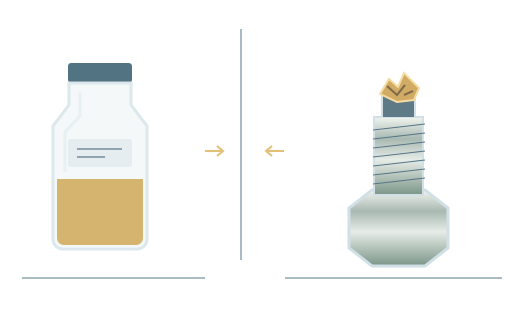
The report says low iron. A coarse metal flake is sitting on the gearbox's magnetic plug. Keep both findings available.
The laboratory result describes material in a prepared oil sample. The plug has captured material at a different location, possibly over a different period. The flake may never have entered that bottle.
Before scheduling another routine sample, retain the debris and ask the laboratory what the existing result actually represents. An operating alarm, abnormal noise or required inspection still follows the site's response procedure.
Which material reached each examination?
- Oil collected from a named point.
- Sample mixed and prepared by the laboratory.
- Elements measured within the method's response.
Keep the sample point, operating state and preparation beside the number.
- Material retained on the magnetic plug.
- Location and recovery recorded.
- Debris preserved for an agreed examination.
Keep the last plug-cleaning date and collection history beside the material.
Read “iron” with the method and preparation
Routine ICP-AES is useful for tracking wear metals, additive elements and contaminants. Its response to debris depends on particle size and how the sample is prepared.
The public scope of ASTM D5185 says the method uses oil-soluble metals for calibration, does not quantitatively determine insoluble particles and can give low results for particles larger than a few micrometres. A laboratory may use other preparation or examination methods for a particular question. Confirm what was done for this report.
Ask a direct question: “Does the reported iron include the coarse material we are concerned about?” Keep the ICP trend, while being precise about the conclusion it supports: low iron by the stated method in the submitted sample.
Concentration, particle size and particle form answer different questions. A small number on a routine report cannot describe all three.
Choose the follow-up for the evidence that is missing
Give the laboratory the question before choosing a test. These three outputs can complement one another, but their numbers are not interchangeable.
ICP-AES
Useful evidenceElemental concentrations within the stated method and preparation.
LimitParticle-size response and sample representation matter. It is not a complete fragment inventory.
PQ
Useful evidenceA PQ Index that scales with ferromagnetic debris burden in the presented sample.
LimitThe index is not iron in mg/kg, particle shape or evidence for every metal.
Microscopy
Useful evidenceThe size, form and types of recovered particles using an agreed preparation.
LimitInterpret the findings with machine history and a relevant baseline.
ASTM D8184 describes PQ magnetometry for trending ferrous debris. Consistent containers and protocols matter. Its public description cautions against general abnormal-condition thresholds and calls for equipment history in interpretation.
If the question concerns the flake's size and form, ask about microscopic debris examination. ASTM D7684 covers classification and reporting using preparation methods that include membrane patches, ferrography, filter debris and magnetic-plug inspection.
Have the laboratory confirm suitable preparation for the retained material. Subtracting a PQ Index from an ICP concentration, or choosing whichever number looks larger, gives neither result a valid meaning.
Keep the material's history with the material
Agree containers, handling and packaging with the receiving laboratory before cleaning or transferring the plug debris. Photograph its original location when safe, keep separate collection locations separate, and retain the report that prompted the question.
Record when the plug was last cleaned. Material recovered today may have accumulated across an earlier oil charge. An oil change, top-up or filtration event may also change the next oil result. Those histories help the reviewer decide which comparisons are valid.
For the oil sample, record the equipment and lubricant identities, sample point, operating state, hours and recent maintenance. Where you take an oil sample explains why a drain-pan sample and a defined live-zone sample should not quietly become consecutive points on one trend.
A question the laboratory can act on“The oil report shows low iron by ICP, and coarse debris was recovered from the magnetic plug. We have retained the debris and its history. Please advise which examinations can address ferromagnetic burden and particle size or form, and state what material each result represents.”
Download the blank debris-review brief Keep the oil report, retained material and collection history linked.
At the review, bring the elemental trend, any ferrous-debris result, particle description and operating evidence together. The responsible engineer sets the maintenance response. If the flake remains unexplained, give that open question an owner and a next check.
A useful report should narrow the uncertainty. The retained flake gives the team a chance to answer the part that the routine number left open.
Sources and method
The particle comparison uses ideal spheres of the same material. It is geometry, not an instrument detection limit. Laboratory methods and preparation must suit the actual question and retained material.
- ASTM D5185-26: public scope and significance of multielement analysis by ICP-AES, including particle-size response and calibration limitations.
- ASTM D8184-18e1: public scope and significance of ferrous-debris monitoring by PQ, including trending, sample protocols and interpretation with service history.
- ASTM D7684-24: public scope and significance of microscopic particle characterisation, preparation choices and the need for a relevant baseline.
Only the public ASTM descriptions were consulted. The full paid standards were not used. Laboratory-specific preparation, response and interpretation should be confirmed with the laboratory that produced the report.
Practise connecting the sample, test method and maintenance question.